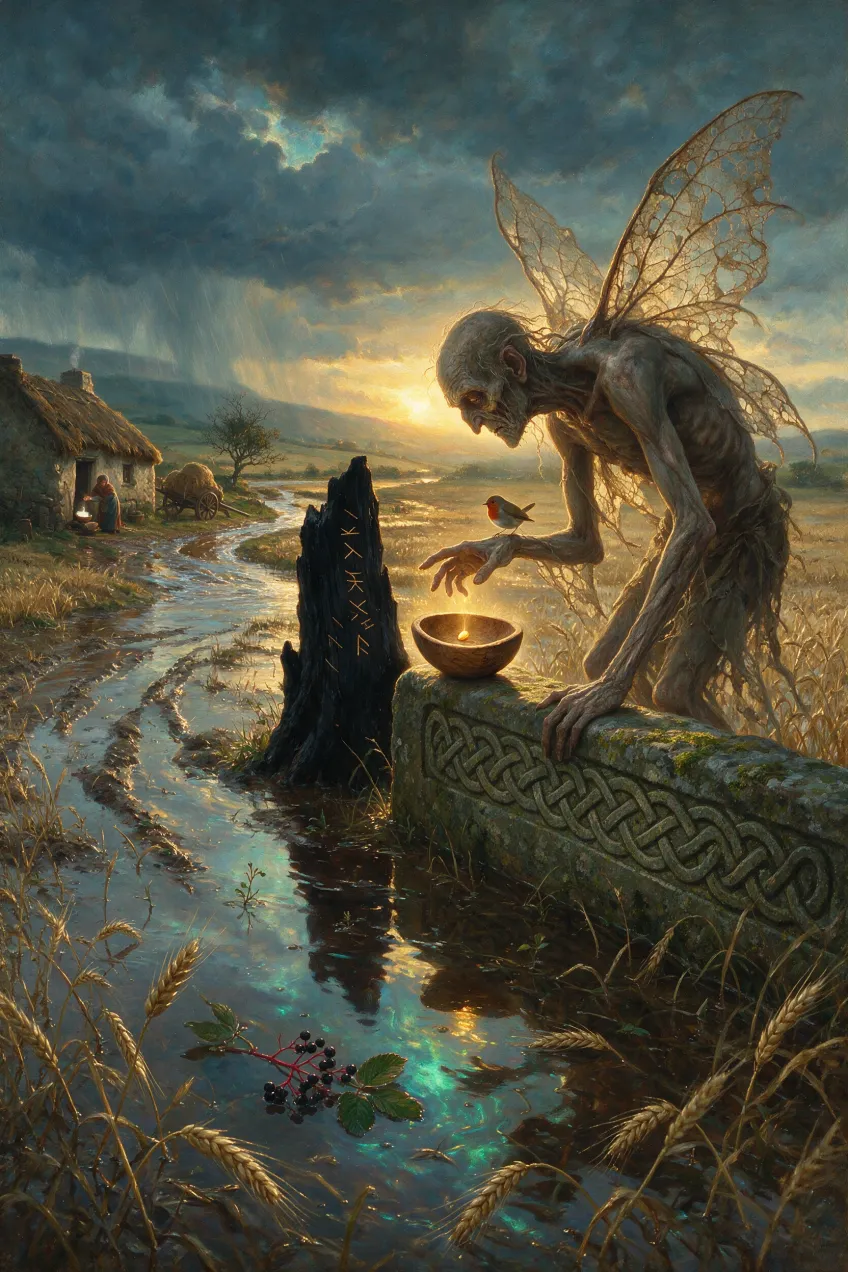
Great Hunger (Fear Gorta)
I knock at every door in the county, and I have never once been begging for bread.
Who they are
The Fear Gorta — the Man of Hunger — gaunt as a famine field after the Lammas flood, ash-grey skin drawn over bone, and still, somehow, noble. He walks the roads in the hungry month, when the old harvest is gone and the new one isn't in, holding out a wooden begging-bowl with a faint gold light around its emptiness. The tradition is blunt about him: the Good Neighbours repay the open hand with abundance and punish the shut door with want. He is the test that comes to the door. What you do with an empty bowl is who you are — and he already knows.
Drawn upright — the teaching
Say out loud what you are actually starving for — love, rest, enough money, to be seen. Not the respectable version. The real one. A hunger named and honored finally gets fed; a hunger denied just orders for you, badly, for years.
The working
Set an empty bowl on the table — plain earthenware if you have it. Sit with its emptiness a moment; don't rush past the ache, it's information. Then name the true hunger over it, out loud. Then feed it one real thing, the same day: the nap actually taken, the meal actually cooked, the honest ask actually sent. If the thing won't fit in a bowl, write it on paper and put the paper in. And leave a corner of bread beside the bowl for the ones who walk the roads hungry — the open hand is the oldest luck there is.
Drawn reversed — the shadow
Some hungers fatten the more you feed them — the next drink, the next win, the next thing you swore would finally be enough. That is not appetite. That is a hole wearing appetite's clothes, and "more" is its favorite meal.
The undoing
Turn the bowl upside-down on the table. Closed. No more more. Then say what is really starving underneath it — the loneliness under the scrolling, the fear under the hustle, the grief under the drink — and turn the bowl right side up for that one, and feed it one true thing. Chase the substitute and the ache never fills. Feed the true hunger and it goes quiet at last — quicker than you'd believe.
Its tree · the ogham
Ruis — the elder. The last letter of the old year — endings and transition — the tree that fruits at the edge of the dark: black berries on red stalks when almost everything else is done. It teaches what he teaches: the year gets hungry before it gets fed, and the feeding always starts with telling the truth about the hunger.
Sit with this
What are you actually starving for? And what have you been eating instead of it?