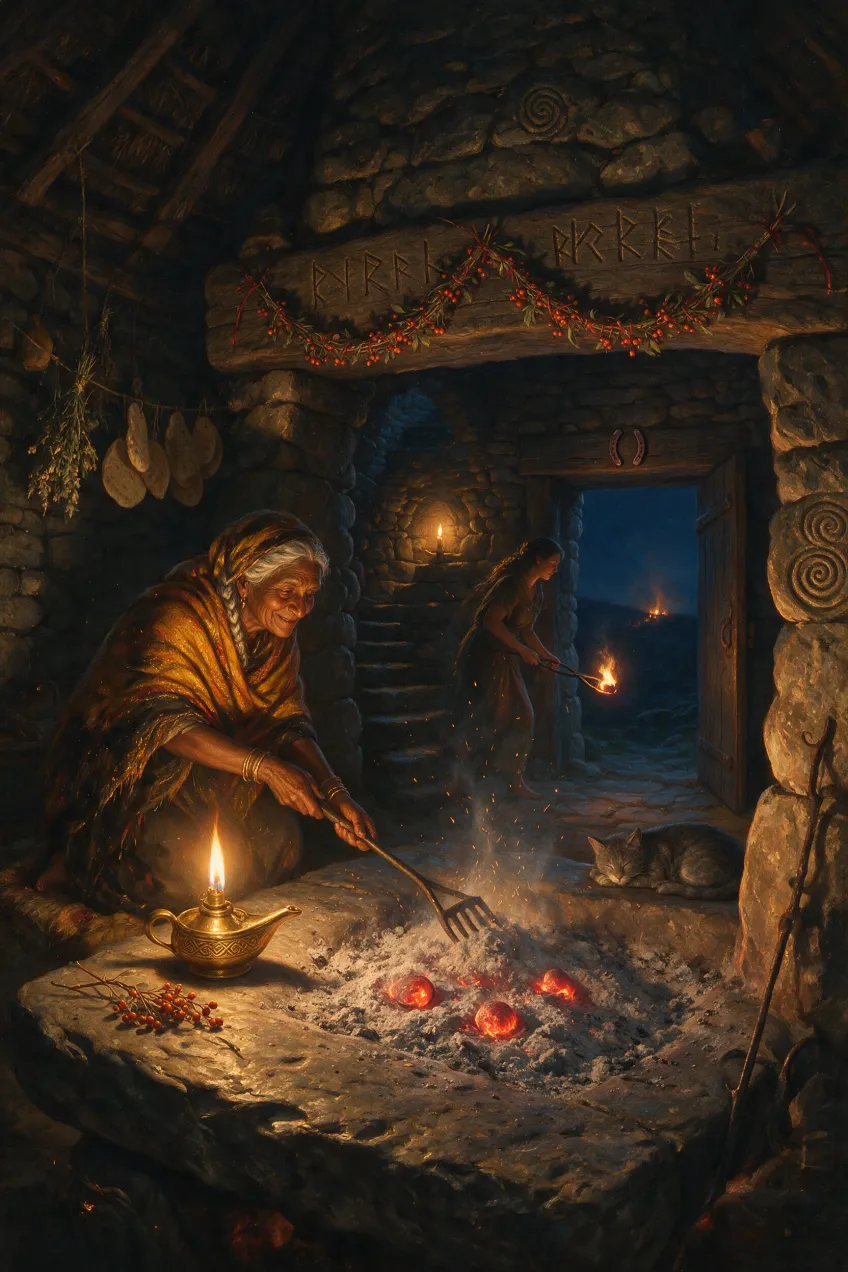
Hearth-Grandmother
This fire hasn't gone out in three hundred years. Neither have I. Sit. Eat. Then go live.
Who they are
The ancient keeper of the great hearth in the turf broch — a crone in a saffron-and-ember shawl, brass bangles chiming low, wingless, because a hearth does not travel. The hobs and house-brownies answer to her; the cricket sings on her stone and the cat owns the warm end. Hers is the oldest office in any house: in the Gaelic world the fire was never let die — each night it was smoored, the embers banked under ash with a blessing spoken over them, so no one ever woke to a cold house. To lose your fire meant walking to a neighbor's door to beg a coal, and everyone knew. The hearth was the house's living heart, and the one who kept it kept the family.
Drawn upright — the teaching
Tend the fire that keeps your home warm — the small daily acts that hold your people together. The meal made, the call returned, the bed turned down, the door left on the latch for the late one home. None of it is glamorous and all of it is the actual house. Home is a flame you keep lit, not a thing you own.
The working
Bank the hearth each night the way the old ones did — never let it go fully out. A modern smooring: before sleep, put the house to bed. One kind word to each person under your roof; one message to the far ones; tomorrow's first task laid ready like dry kindling. If a little cream goes out by the hearth for the quiet help, no one need speak of it. Then say the old intent in your own words over the settling house: "The seed of the fire kept whole till morning — blessings on this roof and all beneath it." Small, nightly, unbroken: that is the entire magic.
Drawn reversed — the shadow
Your love keeps everyone pressed too close to the coals. Care that won't let the young ones grow up and leave is still a cage, however warm — and they know it before you do.
The undoing
Open the door. Hand them a coal from your hearth to start their own — the old custom for a new household's first fire. Do it literally: the pan, the recipe, the blanket, given over with its name said plainly — "this starts your hearth" — and then let them go. Loving someone means lighting their fire elsewhere, not keeping them at yours forever. Your fire won't burn smaller for it. That's the physics of hearths.
Its tree · the ogham
Luis — the rowan, hung in garland over her mantel as it hung over the old hearths: the guardian that stands at the edge of the warmth and never crowds it. Protection that lets a house breathe — which is her exact art.
Sit with this
What small fire do you tend every day — and who at your hearth is ready for a coal of their own?