Long Memory
The dead are not gone. They are quiet. Come sit where they can hear you.
Who they are
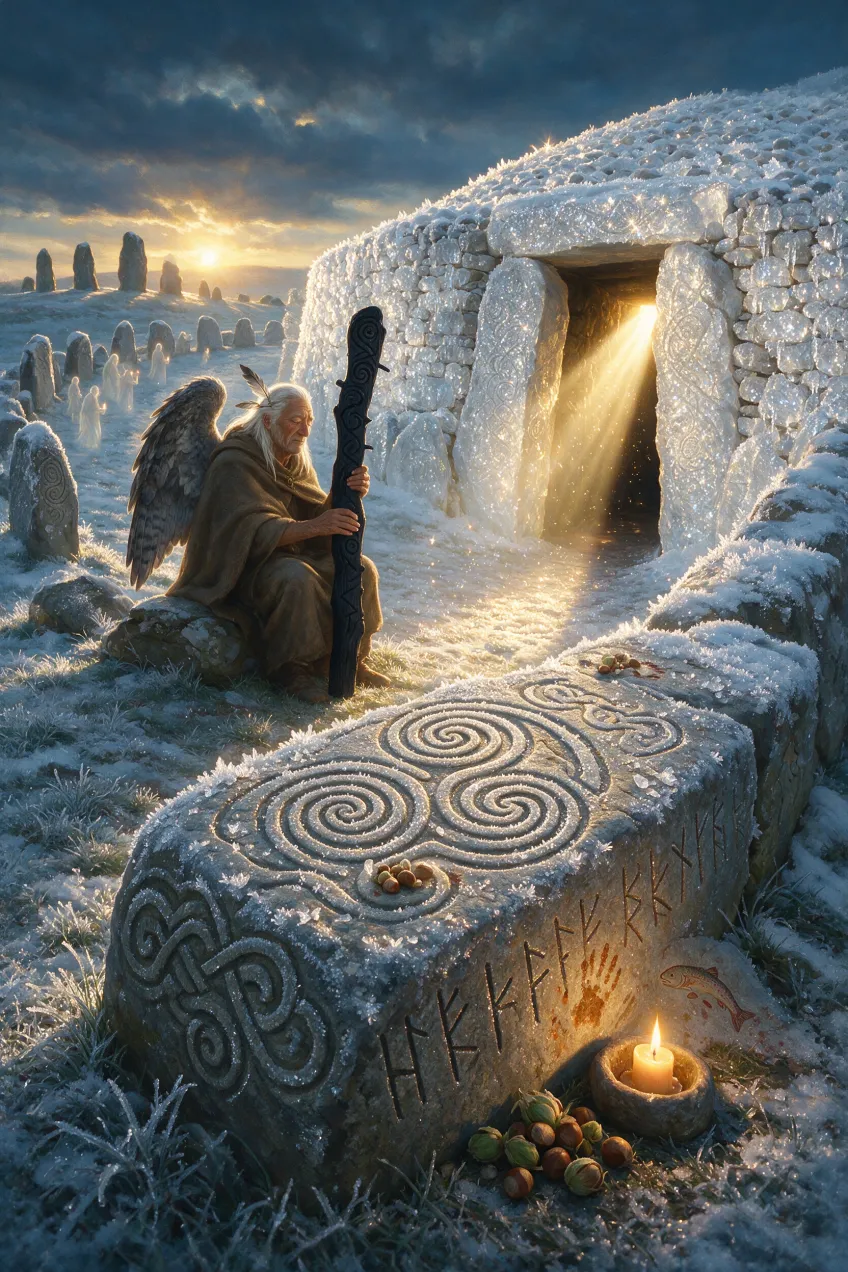
The rememberer — the bard of the mound-folk, older than the tomb he keeps. His hair is bound with feathers, his wings are great-grey-owl, and his staff is black bog-oak carved with a record no one else can read anymore. Behind him the passage tomb waits — white quartz face, kerbstones cut with triple-spirals, and a passage aimed so that one midwinter sunbeam walks down it to the chamber floor. The old people aimed a mountain of stone at a single morning of light: that is how seriously they took remembering. At their wakes, a whole life was spoken aloud — every joy, every disgrace — because a life left unsaid is a life unfinished. He holds the saying.
Drawn upright — the teaching
The ones who came before you still hold what you need to know — about your family, your patterns, where you are really from. Half of what you call "my problem" is a story that started three generations up. They know. Get quiet enough, and they'll tell you.
The working
At the dark of the year — Samhain to midwinter is their season — go somewhere old and silent: a graveyard gate, a standing stone, the oldest room of the house. Set their portion out first: an apple, and a splash of something dark, the way the old households laid a place and a chair for their dead. Light one candle for them. Ask one question — out loud, plainly, the real one. Then do the hard part: stop talking. Listen until the candle gutters. The answer comes on their schedule, not yours — a memory surfacing, a dream that week, a knowing you can't source. And one old rule: if something unseen passes you in that dark, be still and say nothing. Not everything abroad on those nights is yours.
Drawn reversed — the shadow
You have built a home inside a loss. A memory you will not lay down is slowly burying you alive — and calling it devotion doesn't change what it's doing.
The undoing
Carry the grief to the ancestors' stone — any old stone that will stand for them. Say out loud what they meant to you, all of it, and then say that you are letting them rest. Leave the apple. Leave the grief with it. Grief is meant to be visited, not lived in — walk back out into the light, and notice that they'd want you to.
Its tree · the ogham
Iúr — the yew. The oldest living thing in these islands — it hollows out and keeps growing, death and rebirth in one trunk, which is why it stands in every ancient burying-ground. Long memory, held quietly, still green.
Sit with this
If they could see how you're spending your grief — what would they tell you to do with the years you have left?