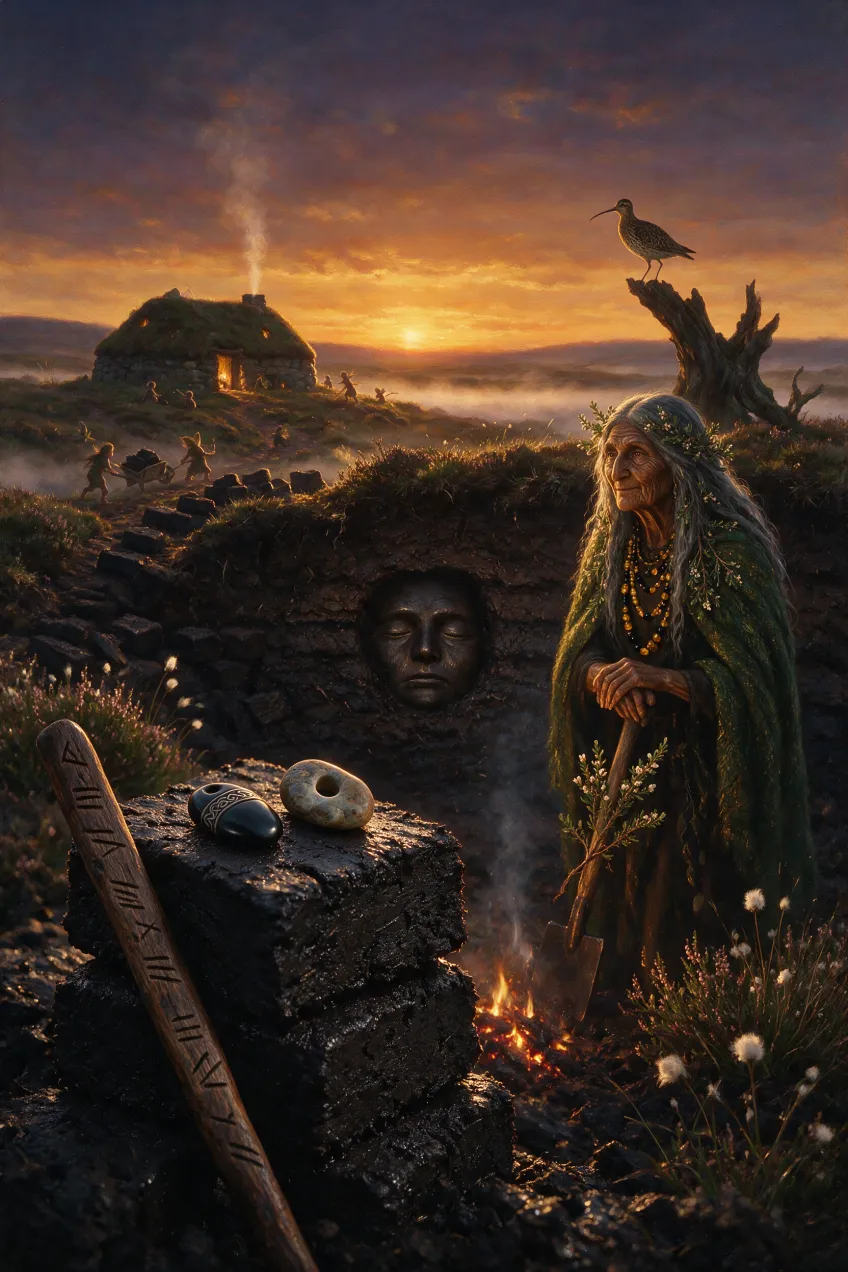
Peat-Crone
Nothing out here is wasted, child — even your endings are fuel. If you'd only stop digging them back up.
Who they are
The ancient one of the turf-banks — skin the brown of wet peat, bog-myrtle in her hair, amber and jet at her throat, and no wings at all; her work is downward. Her emblem is the turf-spade, and her theology is the turf-cutter's year, which every old household lived by: the bog cut in spring, the sods stood up to dry through summer, and what died into the ground ten thousand years ago coming home in the cart to burn all winter on the hearth. Endings, given time and darkness, become the fire. And she keeps one more hearth-law, the tenderest in the tradition: the smooring — the fire banked under its own ash at night with a blessing spoken over it, so that morning finds live coals instead of cold. Nothing wasted. Nothing lost. Everything turned.
Drawn upright — the teaching
What is ending in your life is next season's soil. The job, the chapter, the self that is over — endings compost into beginnings, and that is not consolation, it is agriculture. Plainly: you don't owe the ending your despair. You owe it a clean cut and a decent burial — and it owes you the ground the next thing grows in.
The working
Cut the dead thing and lay it down in the dark ground on purpose — the way turf is cut and stacked to feed next year's fire. Make it physical: write what is over on paper, one plain sentence, and bury it under a sod, or lay it into the compost with your own hands. Set a sprig of bog-myrtle or a stone on the place, so it is a burial and not a fly-tip. Then smoor what's left of your attachment like a night fire: covered, blessed, left — "Rest, and be fuel." Honor the rot instead of fighting it and it makes ground for what comes next. It always has.
Drawn reversed — the shadow
Some endings turn to soil. This one is just spreading — because you keep feeding it. The loss you rehearse, the injustice you re-argue in the shower, the dead thing you dig back up every time it starts to settle. Rot you keep turning over doesn't nourish anything. It festers — and it has started taking the healthy parts down with it.
The undoing
Stop turning it over. That is the discipline: every time the hand reaches for the old wound — the re-read, the re-telling, the midnight prosecution — cover it instead. Put the sod back. Let it finally break down into ground where you can't watch it happen. Rot fed is rot spreading; rot buried is next spring's field.
Its tree · the ogham
Ruis — the elder, the crone's own tree, thriving in the wet ditch where nothing respectable grows. The old people would not cut her without asking leave — you don't take from an ending rudely. Ask leave, cut clean, bury well: that is her whole rite, and hers is the year's last letter for a reason.
Sit with this
Which ending have you buried properly — and which one do you keep digging up to check it's still dead?