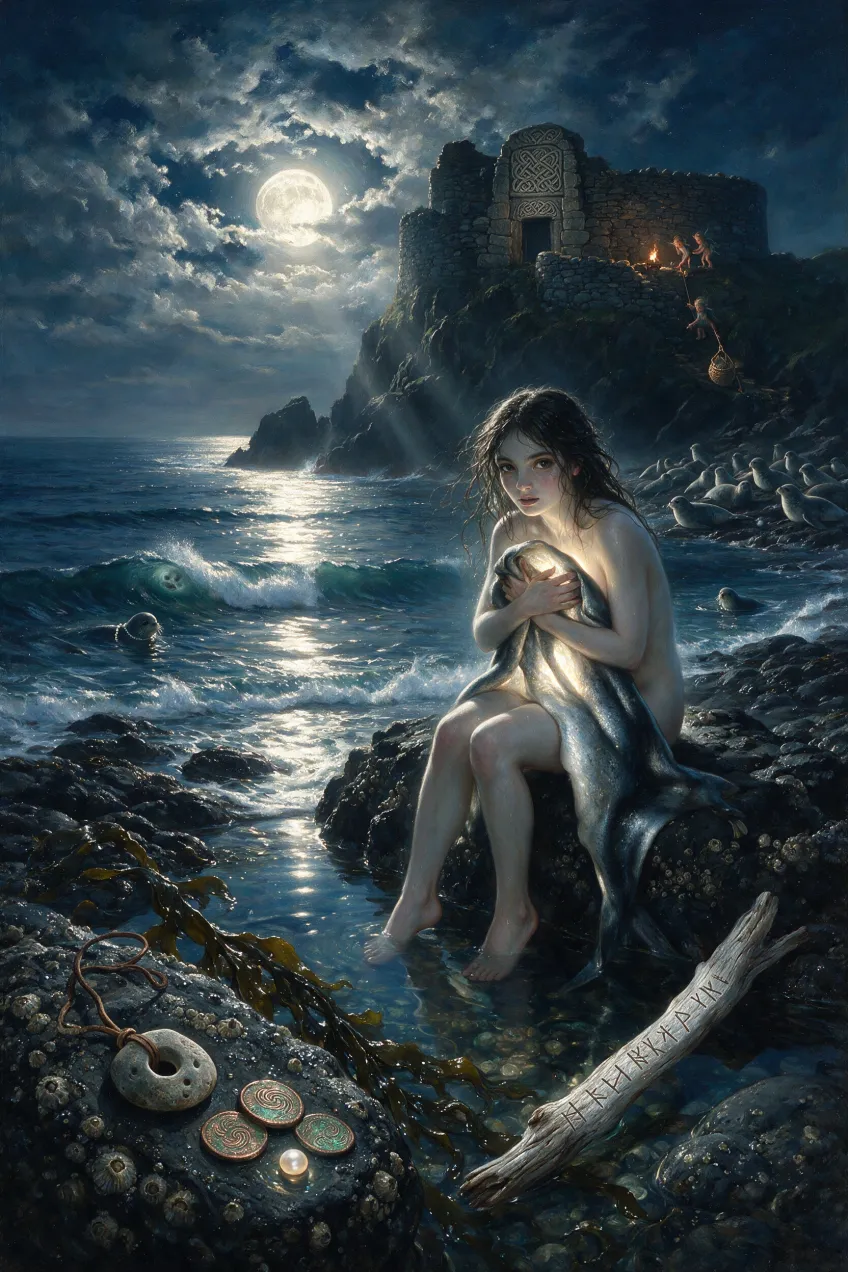
Selkie Daughter
I loved the shore. I loved them all. The skin was still mine.
Who they are
A daughter of the seal-folk — the selkies of the northern isles, who come ashore on certain nights, lay their sealskins on the rocks, and dance in human shape. The old story is always the same, and it is always a theft: a man hides the skin in the thatch and she stays — wife, mother, kind and quiet, sea-dark eyes never quite leaving the horizon — until, years on, a child finds a queer silver bundle in the rafters, and she is gone on the next tide. The tellers never once call her cruel for going. The sea was hers before the house was. On the moonlit skerry below the dun she holds the folded sealskin against her chest, a hag-stone on a cord at her throat — the stone you look through to see what's true.
Drawn upright — the teaching
Part of who you really are has been hidden or kept from you — traded away so long ago you may have helped hide it. The wildness, the art, the name, the plans you had before you became convenient: the ache you can't explain is that part, still alive, asking. You can't be caged from your own nature forever. Nobody can — that is the one mercy in her story.
The working
Find the sealskin. Sit down and name — on paper or out loud — what was taken and when: the freedom, the name, the wild part someone locked away because it made you harder to keep. Then take one piece of it back into your own hands, today, physically where you can: the instrument out of the attic and into the front room, the old name back on your letters. Hold it in both hands and say, once: "Mine. It was always mine." Do it at the turn of the tide if you can — the sea's own threshold — and look at the thing through a hag-stone if you have one: the holed stone shows a thing as it is, glamour and all. This working asks no one's permission. That is the point of it.
Drawn reversed — the shadow
Someone took a piece of your freedom and you called the cage love. Maybe they did too. But your true nature won't stay locked up, and everyone watching knows it — the sea-eyes at the window have been giving you away for years.
The undoing
Find where your skin's been hidden — in whose keeping, behind which old agreement — and take it back. Then return to the sea that's yours: the life, the work, the self you were before the bargain — even if it means leaving a shore you loved, and grieving that shore honestly as you go. What was taken from you is still yours to reclaim; it was never theirs to keep. And the going is not revenge — in the old tales she watches over her children's boats forever after. You can love them from your own element; you just can't do it from inside a cage and call it whole.
Its tree · the ogham
Saille — the willow. Cut a willow to the stump and it comes back; drive a willow post into wet ground and it roots and leafs. You cannot make willow be anything but willow. That is the whole of her story — and, if you're honest, of yours.
Sit with this
What did you trade for being kept? And where, honestly, is the skin hidden?