The Bramble-Rider
Choose the gap before you leave the ground. The air is no place to change your mind.
Who they are
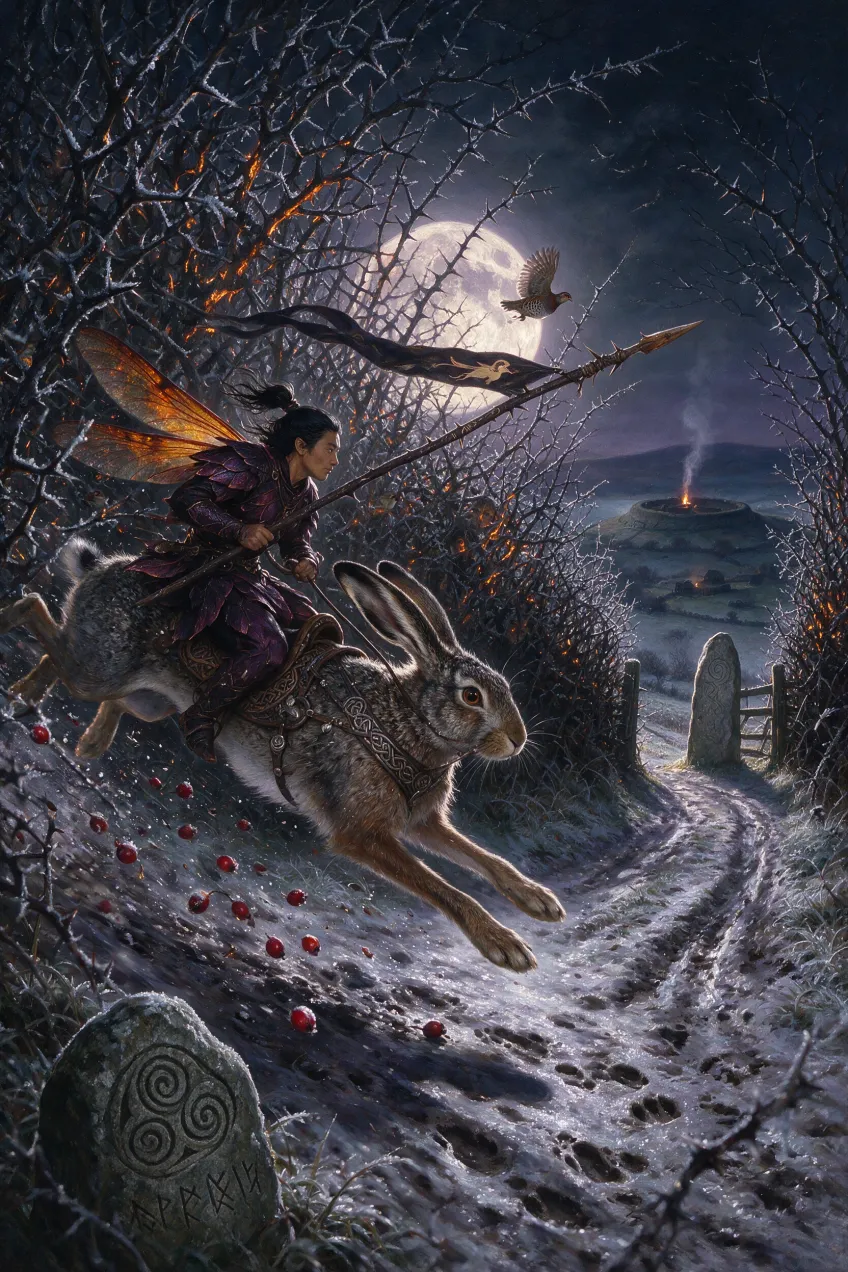
The rider of the moonlit hedgerow — thorn-lance couched, a giant hare at full stretch beneath him, blackthorn blurring past on either side and a standing stone dead ahead. The old testimony knew his kind: the Good Neighbours ride out on the quarter-nights, the fairy rade in full career, and the hare has always been half theirs — the beast no sensible parish harmed lightly, the shape the uncanny wore in every county's telling. He rides the hedge-line itself, the boundary, where a hand's width of hesitation is the difference between the gap and the thorns. His pennant carries the hare sigil; his lance is cut blackthorn scored with Straif. He has never once frozen at the jump. He has also never once looked back — which is his glory, and, as the reversed card knows too well, his flaw.
Drawn upright — the teaching
You've got the nerve to push straight through what makes other people freeze — the conversation, the leap, the ask that dries other mouths. This card says go. But hear the rider's discipline, not just his speed: pick your line through the hedge before you spur the hare. Nerve without a chosen line is just a crash that hasn't happened yet. And once you're airborne — no second-guessing mid-leap. Overthinking is its own kind of thorn; trust yourself and go.
The working
The night before the jump — the pitch, the move, the hard talk — walk the line once, out loud: where you're going, by which gap, in one plain sentence: "I'm asking for the raise, tomorrow, in the morning meeting." That's the line chosen. Then in the moment, spur and don't touch the reins again — no mid-air redrafting, no softening the sentence halfway through saying it. A rider who trusts his line lands clean. Carry a hare's boldness and bless it after, whatever the landing: "Blessings on the leap and the ground that met me."
Drawn reversed — the shadow
Barreling ahead and cutting up everyone in your path isn't brave — it's reckless with other people's skin. The people behind you have names, and your speed is leaving wreckage with names on it. Being first through the hedge means nothing if you tore the hedge open on everyone following.
The undoing
Rein in. Then ride back down the line you tore through — literally retrace it: the colleague flattened in the meeting, the friend steamrolled, the family dragged through your last great leap — and tend the ones you left bleeding, by name, one at a time. Getting there fast doesn't count if you shred the ones who came with you. A rade is judged by who's still riding with you at the end of it.
Its tree · the ogham
Straif — the blackthorn, lance-wood. The thorn punishes the rusher and parts clean for the rider who chose the gap — same hedge, both verdicts, and the difference was decided before the leap.
Sit with this
Where do you need to stop deliberating and jump? And who's still picking out thorns from the last time you did?