The Drowned Causeway
I have carried kings across, and I have kept the careless. The difference was never luck.
Who they are
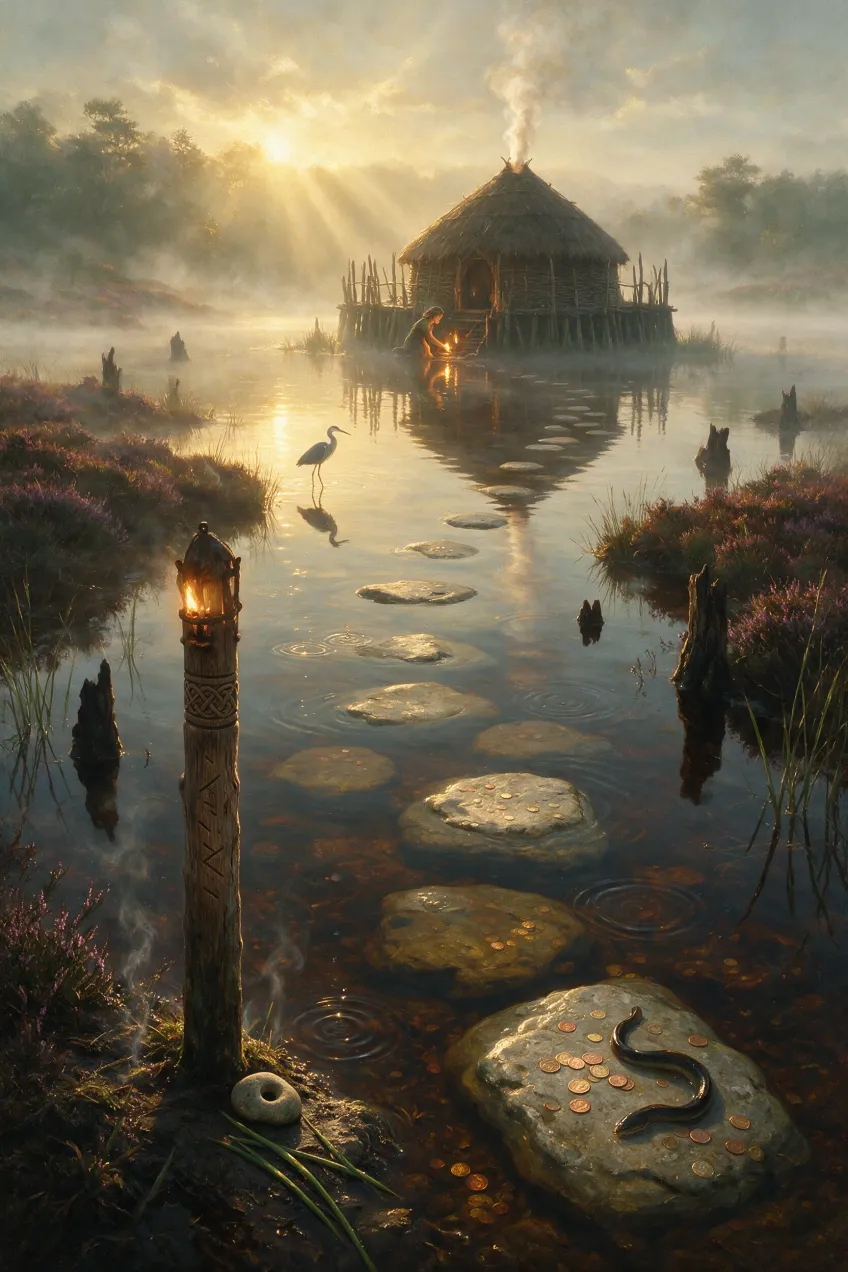
A stone road running just beneath the surface of a still dawn lough, out toward a crannóg asleep in the fog. The old lake-dwellers built these on purpose: causeways of stone on alder piles, laid a hand's-breadth underwater — and often crooked, a turn where a straight line would drown you — so that only the household knew the way, and a raider's confidence was the lake's dinner. Travelers paid at crossings, too: coins left on the stones, the old water-toll, because a road that carries you over the dark is owed something. The road is here. It has held weight for two thousand years. You just can't see it — you have to feel for it, the way everyone who ever got home dry felt for it.
Drawn upright — the teaching
The safe path is there even though you can't quite see it — it runs just under the surface. Plainly: in the trouble you are standing in front of, there is a way across that has actually borne weight before — the method that worked, the elder who crossed this exact water, the boring proven route. It is not visible from the bank. It is findable from the first stone.
The working
Feel for the stones that have held before — step where others have crossed. In practice: before you improvise, ask who has crossed this water. Find the person ten years ahead of you, the way it has been done by people who got home dry, and put your foot where their feet went — one stone at a time, letting your own weight confirm each before you ask for the next. And pay the crossing-toll at the first stone: something small and real — a coin, a kindness, a spoken word — "Blessings on the road and the ones who laid it." Trust the path that has genuinely borne weight and you will cross what looked impossible from the bank.
Drawn reversed — the shadow
You have put your weight on footing that was never really there — a promise, a plan, a person that only looked solid from the bank. And the drowned road's failures are not like dry-land failures: trust the wrong path out here and it doesn't trip you. It takes you under.
The undoing
Back off the drowned stone — now, while backing off is still possible; retreat to the last footing you know held. Then test each stone with your staff before you commit: the claim verified, the promise dated, the pattern checked against what they have actually done, not said. Cross only what holds. Not every glimmer under the water is a road.
Its tree · the ogham
Fearn — the alder, the wood of the piles under every causeway and crannóg in the old country. Cut, it bleeds red like a man; drowned, it refuses to rot — alder does its finest work underwater, holding up roads nobody can see. The truest support in your life may look like that too: unglamorous, invisible, and bearing everything.
Sit with this
Whose crossing could you study before you wade? And what footing are you standing on right now that has never once been tested?