The Rath
Walk the ring. Mend the gap. Leave the stone alone. Three rules — and the third is the whole of the law.
Who they are
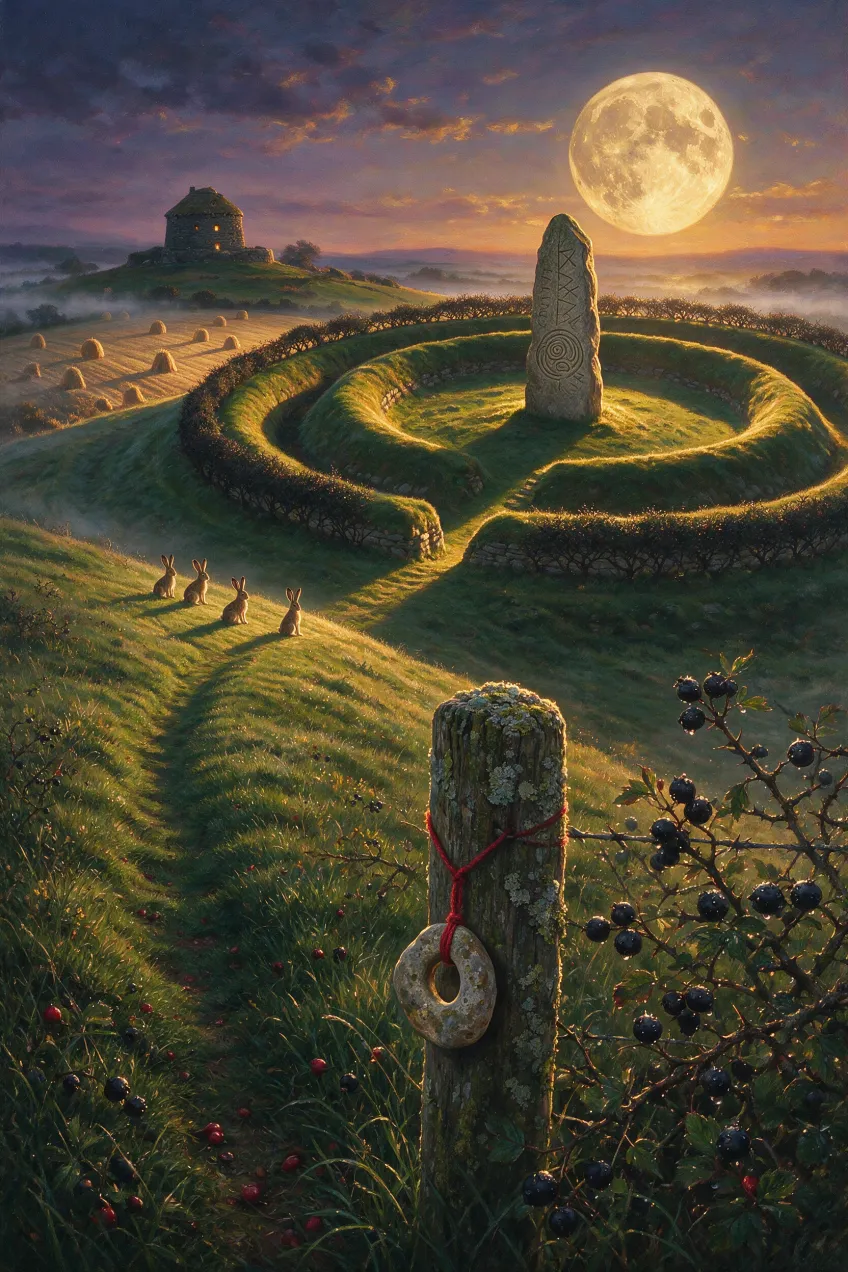
A ring-fort on a low green hill at Lughnasadh dusk — concentric turf ramparts gone velvet with a thousand summers, a deep ditch, a ring of blackthorn, and at the center one lone ogham monolith nobody has moved since it was set. This is the Rootfolk's own house, and the countryside still knows it: the fairy forts stand in their tens of thousands, to this day farmers plough around them, and road-builders within living memory have bent a road rather than touch one tree. A fairy-path shows faint in the grass, running arrow-straight to the next fort over the hill — Their road, not yours. Three hares graze the rampart. A hag-stone hangs on the gate-post, and through its eye, they say, you can see the place as it truly is: not a ruin. A household. Occupied.
Drawn upright — the teaching
There is something in your keeping — a home, a tradition, a boundary handed down — that still keeps your family safe, whether or not anyone remembers why. Sunday at the one table. The house that stays in the family. The rule nobody breaks. It looks like an old wall in your way; it is the reason there's an inside.
The working
Walk the old boundary once a year — sunwise, the whole ring, at the year's turning. Mend the one gap you find: the fence post, the lapsed ritual, the call that hasn't happened since the funeral — one mend, done properly. And otherwise leave it untouched: don't improve it, don't move the stone to where it would look better. Leave a little cream at the center as you pass, and bless the ring — "Blessings on the ring and the ones it holds." Honor it, leave it be, and it shelters you and yours for years.
Drawn reversed — the shadow
Tear up something sacred for a little more convenience — sell the old home for the quick money, break the last rule that held the family in one piece — and what you gain will not cover what it costs. The men who bulldozed the forts always had excellent reasons. Ask what their luck did next.
The undoing
Put back what you moved. Restore the boundary you broke — the apology, the returned thing, the tradition restarted this year, not someday — and leave the fairy-path alone: stop laying your plans across ground that was never yours to build on. Some things say no and mean it. Don't make the Good Neighbours prove it.
Its tree · the ogham
Duir — the oak. Sovereignty — the chieftain's letter, cut into the one stone at the rath's heart. Here it means the oldest kind of rule: some boundaries you inherit; you don't renegotiate them. The stone isn't in the ring to explain itself. It's there to still be there.
Sit with this
What's the old boundary in your family that is still quietly holding? And what would it truly cost — count everything — to be the one who broke it?