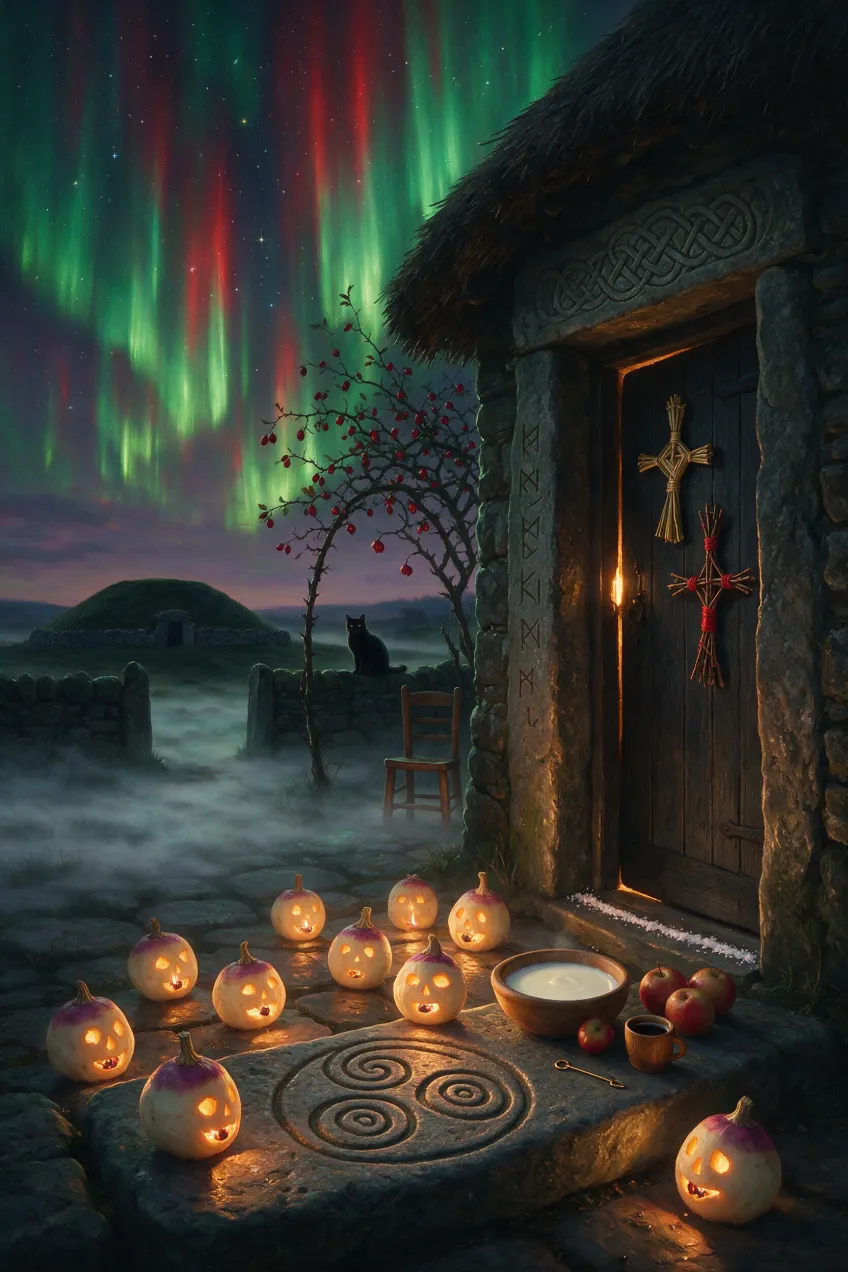
The Turnip-Lantern Altar
Ward the sill against what rides the wind, child. But leave the latch off — some of what comes tonight loved you.
Who they are
A Samhain doorstep at midnight — carved turnip lanterns with jagged, patient faces, each lit from a single coal off the hearth — the true altar the old countries kept long before anyone met a pumpkin. On the door, the rush-cross made fresh each Samhain eve, and a rowan cross bound in red thread; coarse salt along the sill; a milk-bowl on the step; inside, apples, dark ale, an empty chair. Behind it all, green-crimson curtains of aurora over a distant tomb-mound. Because the night was two things at once, and the old people never confused them: the Sluagh abroad on the wind, warded off with salt and iron and light — and the family's own dead expected home, welcomed with food and a warm fire. Same doorstep, both jobs — and that discernment is the whole altar.
Drawn upright — the teaching
Keep a light burning for what and who you've loved and lost — remembrance is its own protection on the hardest nights. Naming your dead and marking the small anniversaries isn't wallowing; a house that honors what it lost stands warmer and better-warded than one that just locks up.
The working
Build the altar. Carve a turnip lantern — a turnip if you can get one; the jagged face is the ward, so cut it fierce. Light it from a single coal, or one match — one source, the fire kept whole. Set the extra place at the table, lay the salt along the sill, and name your dead aloud at the open door, each of them: "You are remembered in this house. Come in if you come kindly." Then tend the flame through the evening — the tending is the working. Keep the light fed and the ones who mattered stay near; that is the promise the custom carries.
Drawn reversed — the shadow
Fear has you barring the door against everything — including the love you're grieving and the people who came to comfort you. Dread that total shuts out the tenderness right along with the threat, and then calls itself safety.
The undoing
Keep the wards — the salt and the rowan stay at the sill; you are allowed protection. But open the door to the living who came to hold you: the friend on the step, the sister who keeps calling, the neighbour with the covered dish. Let one of them in tonight — actually in, coat off, kettle on. Ward against harm, not against the arms that came to comfort you. The old altar did both at once: salt on the sill, the chair kept warm — same night, same door.
Its tree · the ogham
Ruis — the elder. The doorkeeper's tree, and the old ban on it was plain: elder is never burned in the hearth. Some woods are for warmth and some are for warding, and wisdom is knowing which is which — the altar's whole lesson, standing at the sill: what you keep out, what you welcome in, and never confusing the two.
Sit with this
What are you barring the door against — and who has been standing out there, patient, meaning you nothing but love?