Yew-Elder (Iúr)
I have died more times than your family has names — and never once left this ground.
Who they are
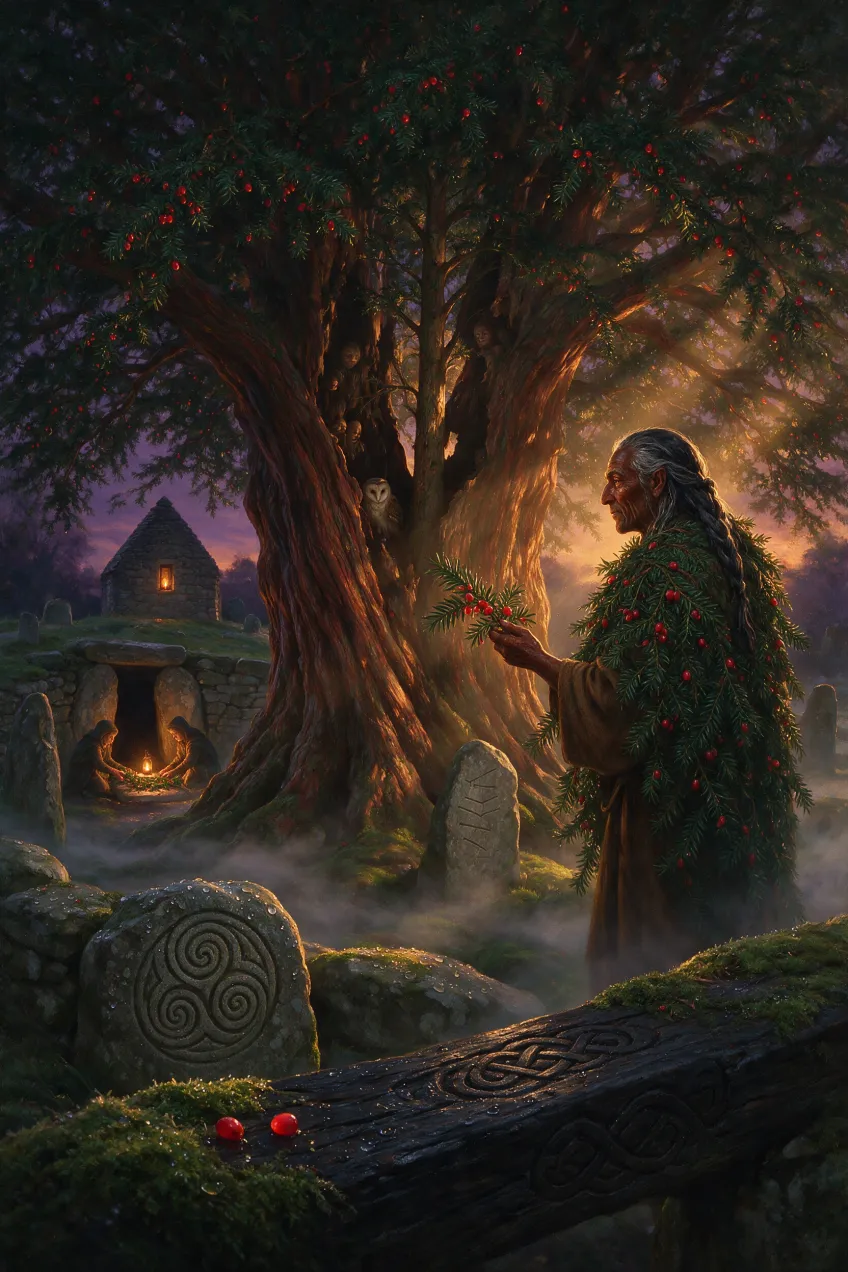
The elder of the churchyard yew — bark-dark and deep-lined, mantled in yew-green and aril-red, wingless, because a tree needs no wings. The yews are older than the churchyards around them; the builders raised their holy places beside trees that were already ancient. And the yew's real trick, the one botany signs off on: as its heartwood rots hollow, it lowers a root down inside its own trunk, and that root becomes a new trunk — a young tree rising inside the shell of the old one. Death and rebirth in a single body, no metaphor required. The old stories say the druids cut their ogham on rods of yew to find what was lost. He is what they were consulting: the patience that outlasts its own endings.
Drawn upright — the teaching
Life renews itself right inside what's dying. Something in your life is ending — and the new thing is not somewhere else, waiting for you to relocate. It is rising in the middle of the loss, out of the same material. Don't leave. Look closer.
The working
Sit with a yew if you can find one — churchyards keep them — or with the oldest living thing you can reach. Name what's ending, out loud and precisely; vagueness is how endings drag on for years. Then look for the green shoot already rising from the rot: the skill grown inside the job that's over, the self that only exists because the marriage happened. Put your hand on the evidence — the bark, the notebook, the new thing's first small proof — and say: "Root down. Rise." What you are outlasts any single ending; root down where you are and rise again.
Drawn reversed — the shadow
You've stayed too long with what's gone — the dead relationship, the old grief, the past self — and it has turned cold and toxic, freezing you in place. You're living in the tomb, and the living are waiting outside.
The undoing
Walk out the low door. Literally walk — out of the shrine you've made of the room, the routine, the archive of how it used to be — back into daylight, and let the dead thing compost behind you. That isn't disrespect; compost is what feeds the new trunk. The yew grows its new trunk only when it stops guarding the old one. So do you.
Its tree · the ogham
Iúr — the yew. He is the yew, down to the emblem in his hand: the red aril — sweet flesh around one poisonous seed. Poison and eternity in the same berry, and it teaches exact respect: take the sweetness of what's over. Do not swallow the part that kills.
Sit with this
What is ending around you right now — and what is already growing in the middle of it that you haven't once looked at?